

 |
| Jeff Lee, Plant Ecologist/ Botanist |
 |
September 15-October 15. "A unique opportunity arose when the Minnesota Biological Survey (MBS) was invited to participate in the Aldo & Leonardo Wilderness Science and Art Collaboration. A partnership of the Colorado Art Ranch and the U.S. Forest Service Aldo Leopold Wilderness Research Institute, the collaboration aims to bring together visiting artists and resident scientists to (1) highlight the success of the Wilderness Act on its 50th anniversary in 2014, (2) honor the work of wilderness scientists, and (3) capture and communicate the value of wild areas through artistic expression and interpretation.
As part of the collaboration, MBS plant ecologists Lawson Gerdes and Daniel Wovcha, energetic volunteer Jenna Pollard and I teamed up with visual and relationally-based artist Katherine Ball for an eight-day, MBS Border Lakes survey trip in the Boundary Waters Canoe Area Wilderness. During her residency, Katie has become familiar with MBS field surveys and mission to guide land management decisions by providing high-quality data on the distribution of rare plants, animals, and communities. Equally poignant, however, was the influence that Katie had on us. Seeing her marvel at the beauty of the Border Lakes, and express that awe with daily postcard writings and reflection, affirmed that wilderness conservation is a shared commonality among scientists and artists alike.
Our route took us through Lakes One, Two, Three, Four, Hudson, Insula, Kiana, and Alice. September weather in the Boundary Waters can be unpredictable, but after two days of rain at the beginning, we were left with dry conditions, cool mornings, and three sunny 73° days at the tail end. Each morning, we left our campsite on the northeastern side of Insula Lake and paddled to the day's field site. Relevé vegetation plots in a red pine forest (FDn43a) and jack pine woodland (native plant community determination uncertain) on Kiana and Alice Lakes respectively, were punctuated by rare plant searches and native plant community evaluations. New populations of American shore-plantain (Littorella americana, State Special Concern) were discovered on pebbly shores of small islands. Franklin's Phacelia (Phacelia franklinii, State Threatened) was found for the first time in the Lake-North sub-county and in the area affected by the Pagami Creek wildfire of 2011. This species is known to prefer habitats of recent disturbance at a fine scale (e.g. tree tip-ups). Until now, however, it had not yet been documented from such an intense, broad-scale disturbance as the Pagami Creek fire in Minnesota.
The fresh perspective that Katie brought to a MBS Border Lakes survey trip was invaluable. Parallels between scientists and artists become apparent as both professions gain greater familiarity with one another. For instance, carrying out a relevé vegetation plot demonstrates precision and detail that is needed for the plot to accurately describe the greater native plant community. The same precision and detail is equally vital for artwork to successfully convey a message, render emotion, or catalyze social change. Our partnership with Katie does not end with the conclusion of the trip. The collaboration extends to her creation of an art piece that celebrates wilderness and by association the biodiversity contained within. This work will become public and showcase how science and art together is more powerful than either one in isolation".
 |
| Daniel Wovcha, Plant Ecologist |
|
Late August. "MBS ecologist Mike Lee and I spent the last two weeks of August on a plant community & rare plant survey trip in the Basswood Falls and United States Point area of the Boundary Waters Canoe Area Wilderness. It was hot and humid, with placid days and abundant mosquitos in our camp in the evening. We recorded a new population of the state-threatened species lance-leaved violet (Viola lanceolata var. lanceolata) and surveyed a number of interesting habitats, including an expansive rocky glade high above Basswood Lake, several red oak woodlands frequented by bears, mossy jack pine/black spruce woodlands, red pine woodlands, dry cliffs, old beaver meadows, and lake and river shorelines. Other plant species of interest that we located on the trip include St. Lawrence grapefern (Botrychium rugulosum), and Vasey's pondweed (Potamogeton vaseyi)".
 |
| Erika Rowe, Plant Ecologist/ Botanist |
 |
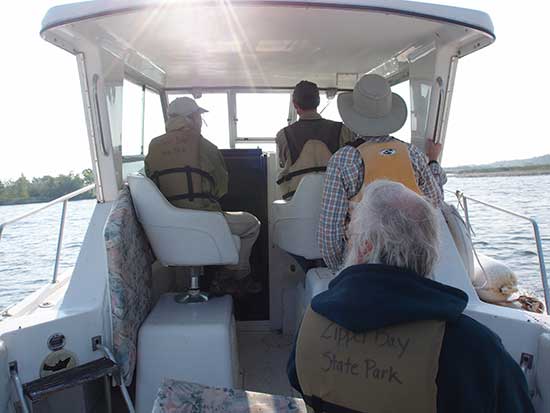
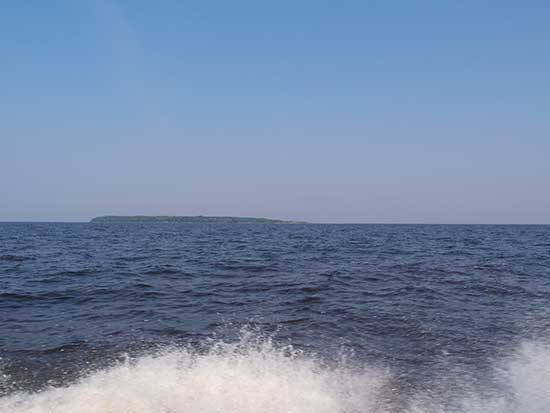
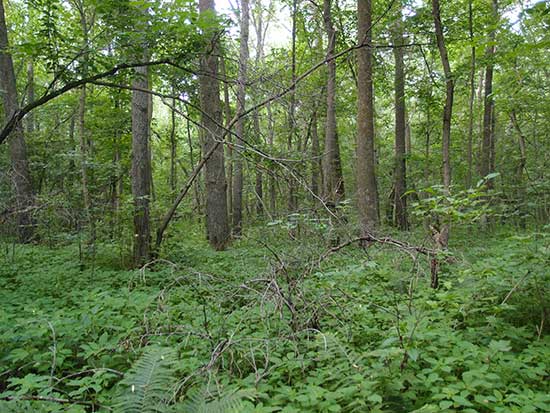
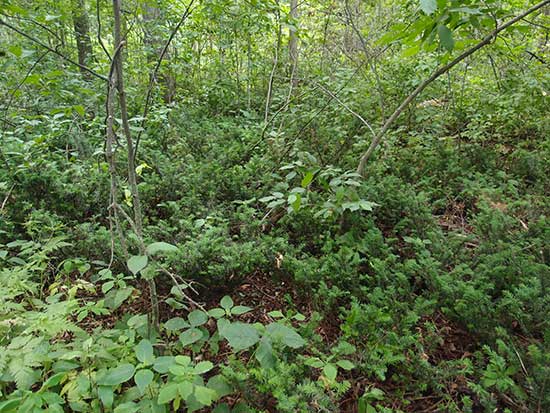
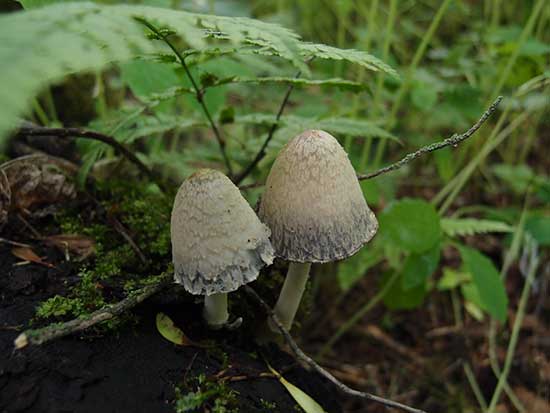
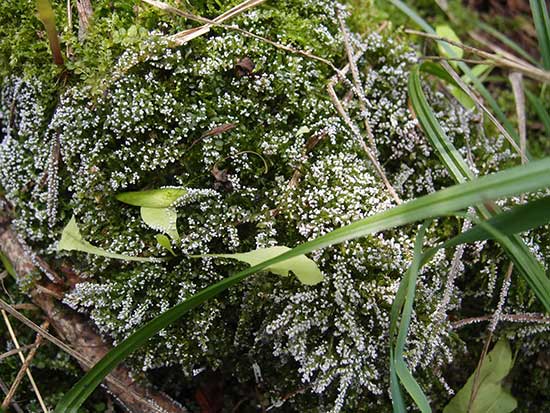
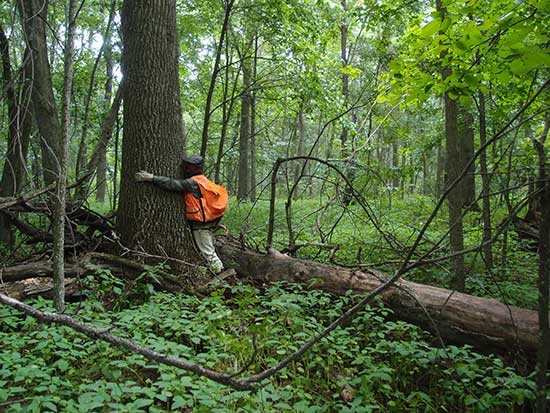
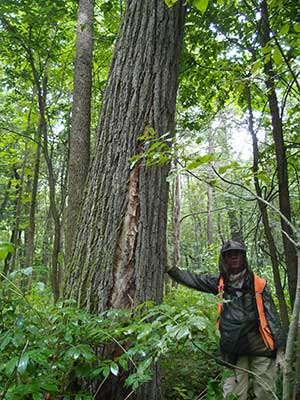
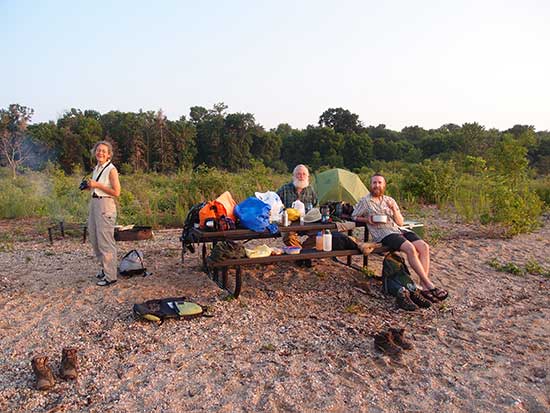
July 10-11. "On a recent trip to Garden Island State Recreation Area in the middle of Lake of the Woods, Becky Marty, Nick Jensen, and Malcolm MacFarlane helped me to try to relocate an old record of the State Threatened species Botrychium lunaria from 1894. Unfortunately we were unsuccessful at that attempt, but we were able to survey the eastern half of the island, which took all day in itself (the island is 3 miles in length and about a 1/3 to 1/2 mile wide of fairly dense, vegetation throughout). The survey helped me to determine the plant communities on the island for future MBS mapping of Lake of the Woods County and also to help the DNR's Division of Parks with their management plans."
 |  |  |  |  |  |  |  |  |  |
 |
| Jeff LeClere, Zoologist |
 |
July 7: Another note from Jeff LeClere on snake research at Lac qui Parle WMA/Chippewa Prairie Preserve. "Yesterday we installed three drift fences in the Patch Burn Grazing project area, which went well and the fences look great! Hopefully they will help in our search for more hog-nosed snakes. Several DNR folks were there to help, including Carol Hall, Anne Yen, Crystal Boyd, Kaala Ross, and Ralph Hanson. A very big thank you goes to Joe Blastick and his TNC crew Emily Mack and Madeline Elfstrom for their excellent assistance installing the drift fences and putting up fencing to keep the cattle out. Thank you! After drift fence installation, a few of us tracked the female hognose we?ve radio-tagged to the ridge and found her active on the surface. She has laid her eggs for the season. As I was looking at her, I happened to spy about an inch of scales and pattern down in a small hole in the ground. Another female plains hognose!! I made the snag before she disappeared into the burrow. She had just laid her eggs and will be implanted with a transmitter tomorrow! One of the benefits Carol and I have always pointed out about telemetry is that tracking one snake will hopefully lead us to more, and that is exactly what happened yesterday."
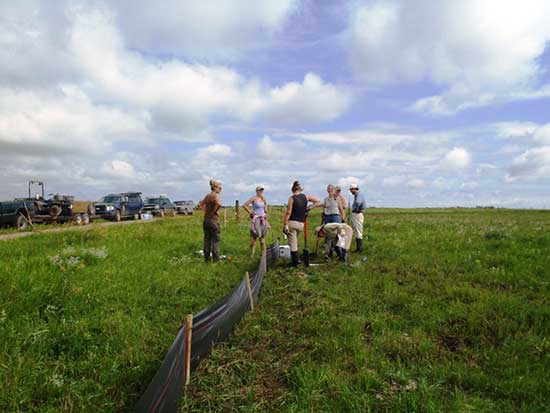 The crew after installing the drift fence at Lac qui Parle WMA. |
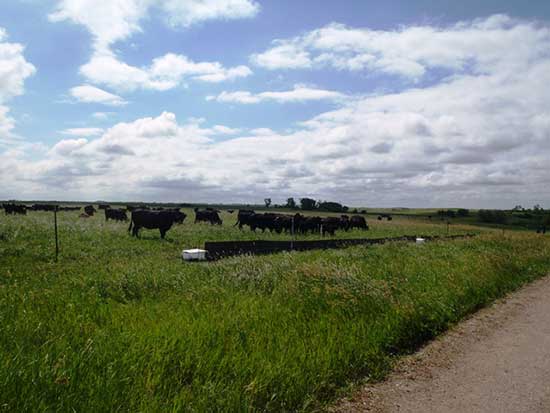 Cows investigating the drift fence. |
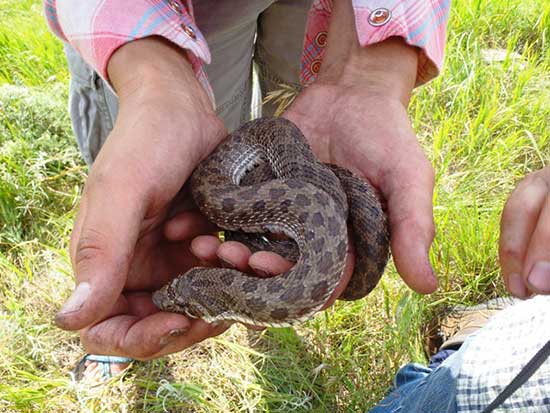 The second female plains hog-nosed snake captured at Lac qui Parle WMA. |
 |
| Lawson Gerdes, MBS Northern Coordinator, Plant Ecologist/Botanist |
|
Summer Solstice, 2013: "Although neither of us had ever seen them, the sporophytes of the rare bryophyte Buxbaumia aphylla or "Bug-on-a Stick" moss, unobtrusively poking up from a short tuft of greenery, were unmistakable. And, if we hadn't been meticulously scouring the ground layer, documenting species and cover in a releve vegetation plot, we may have passed by within inches and not seen them.
Funny how it works... The forest community was unusual to begin with, which is why we stopped for a look around. Turns out, this closed-canopy, red oak forest is likely Mesic Hardwood Forest (MHn35b), a forest community most often associated with stagnation moraines and till plains of north-central Minnesota, but considered a rare occurrence in the scoured bedrock terrain of the Border Lakes. If so, it represents a significant extension of the documented locations for this forest community type in the state. The condition of the forest is another story though. It didn't take long before we recognized the signs of substantial invasion by earthworms; the soils sample confirming without a doubt, our initial assessment.
Buxbaumia aphylla has been recorded regionally from Ontario, Iowa, Wisconsin, and the Upper Peninsula of Michigan. In Minnesota, there is only one other known location for the species from the blufflands of the southeast (Winona County). It is possible that the condition of the forest has some effect on the occurrence of Buxbaumia aphylla, especially given that the "species is found as a pioneering colonist on disturbed soils or old logs in hardwood forests...". Dedicated searches for additional populations would better define the species' distribution and specific habitat needs (Jan Janssens 2013. Statement of Need and Reasonableness (SONAR) - Species Status Sheet. MN DNR Division of Ecological and Water Resources). "
"Bug-on-a Stick" moss (Buxbaumia aphylla) documented during MBS survey of the Border Lakes Subsection (St. Louis County). |
| (left) Sporophytes erupting from Buxbaumia aphylla "Bug-on-a- stick" moss (Collection DLG00992A1). Photo by Jenna M. Pollard. (right) Sporophytes of Buxbaumia aphylla (Collection DLG00992A1). Photo by Jan Janssens |
 |
| Fred Harris, Plant Ecologist |
 |
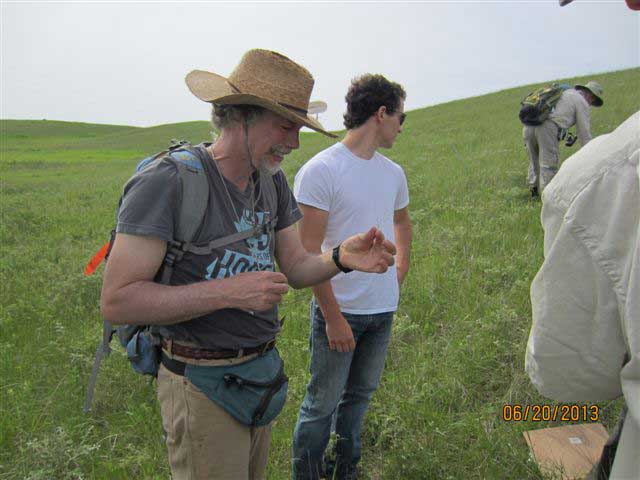
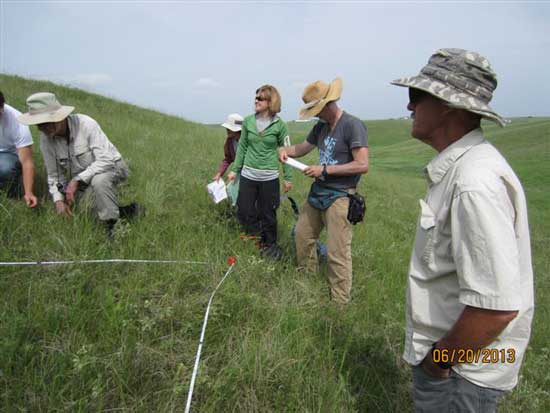
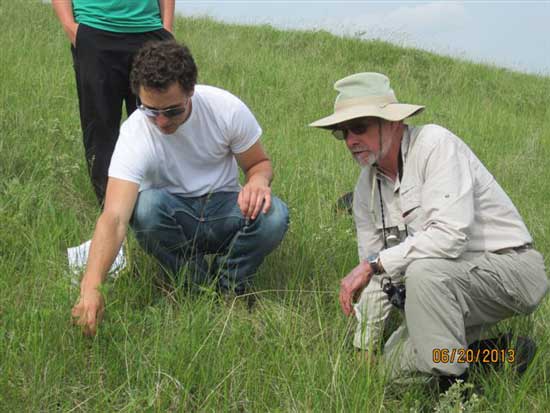
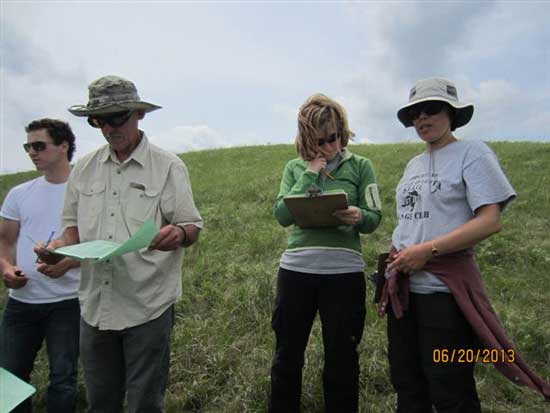
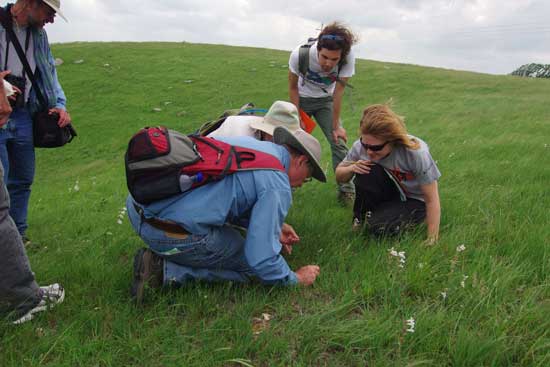
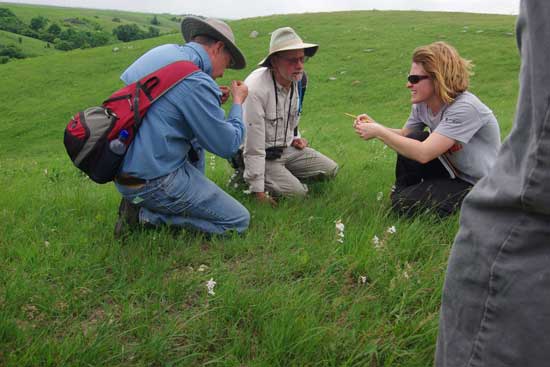
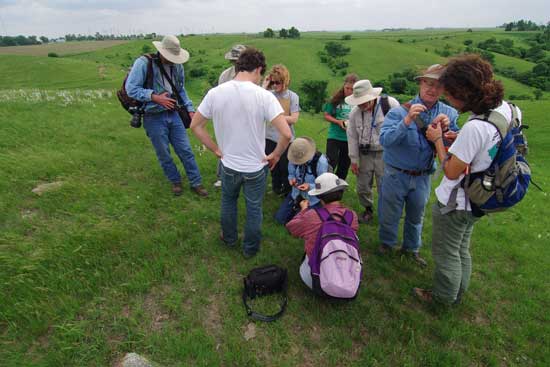
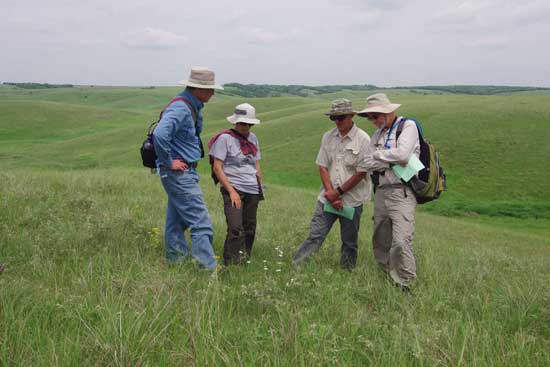
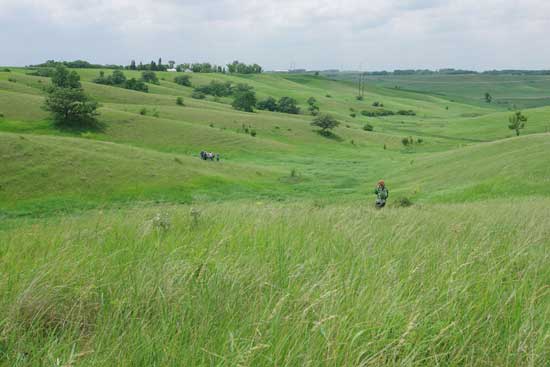
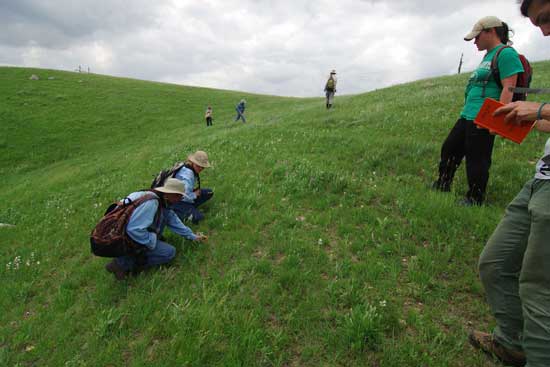
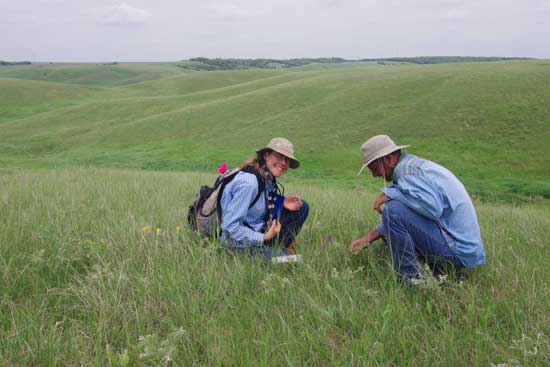
June 20: "These shots are from a field day on June 20 at TNC's Hole in the Mountain Preserve and a nearby privately-owned pasture. This workshop was led by Robert Dana and myself. We had about 14 people total. We started the day compiling a releve vegetation plot. Then the rest of the day was focused on identifying plants and evaluating the condition of outstanding ungrazed prairie, high quality prairie in conservation grazing, and prairie in a privately owned pasture. We have had an enthusiastic, positive response to these workshops and will be organizing more in the future."
 |  |  |  |  |  |  |  |  |  |  |
|
| Jeff LeClere, Zoologist |
 |
June 11: MBS herpetologist Jeff LeClere recently sent in photos from MBS snake research happening this spring. Jeff and technician Anne Yen have been busy with two different snake research projects in Minnesota. Jeff says "This Bullsnake is part of the kickoff of MBS' Bullsnake radio telemetry project taking place at Weaver Dunes in Wabasha County (see Carol Hall's May 8-15 news item below). So far I am tracking two males and two females! I can't wait to see how this project progresses."
 |
|  |  |  |  |  |  |
 |
| Crystal Boyd, Entomologist |
 |
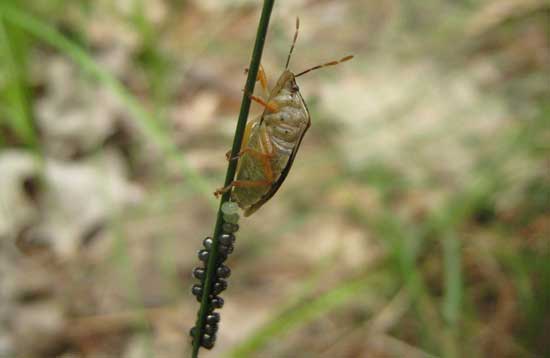
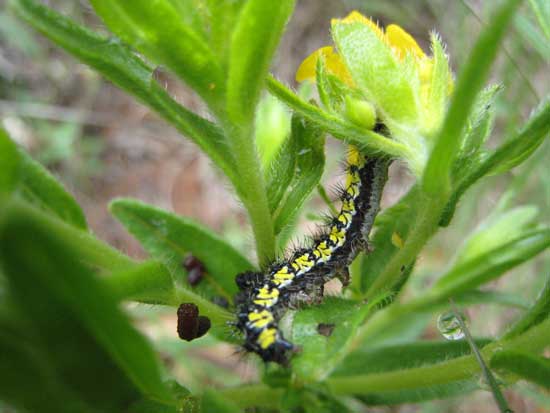
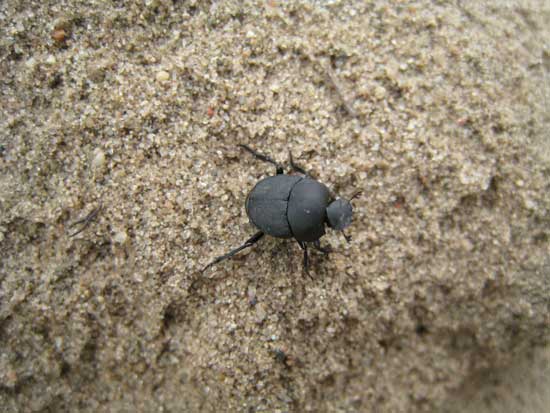
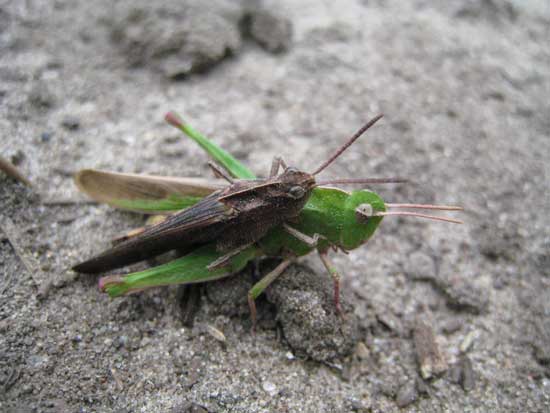
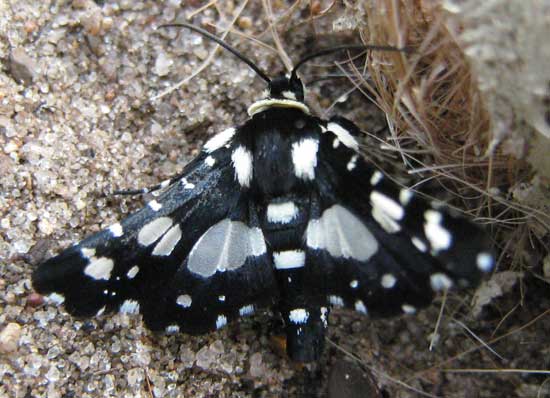
June 11: "About 70% of native bee species nest underground, so sandy places can host rare or interesting species. I visited Uncas Sand Dunes SNA in Sherburne County to look for good nesting sites. The cloudy weather thwarted my efforts to catch bees with a net, but my pan traps found some interesting species. These photos show additional invertebrate species living at Uncas Dunes SNA."
 |  |  |  |  |  |
|
| Crystal Boyd, Entomologist |
 |
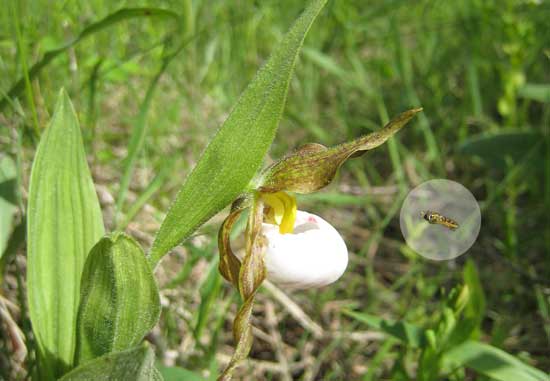
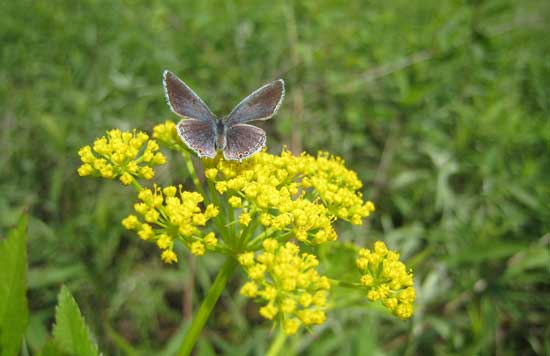
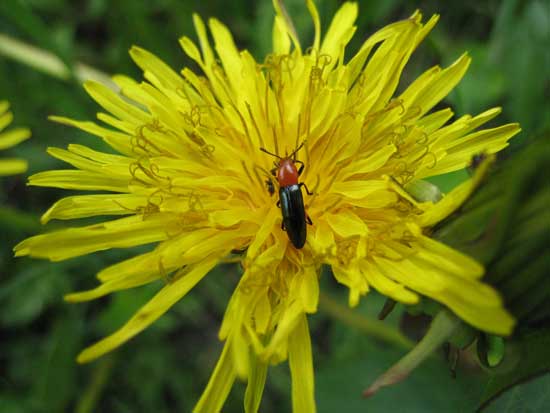
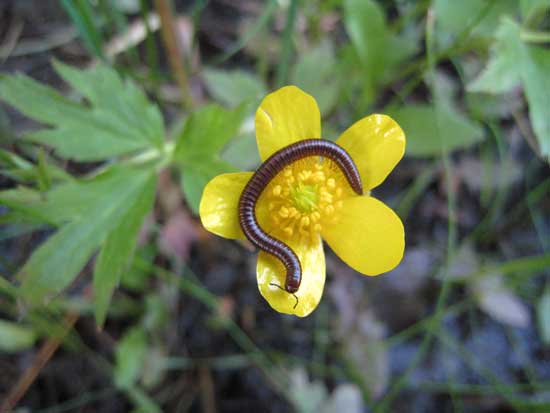
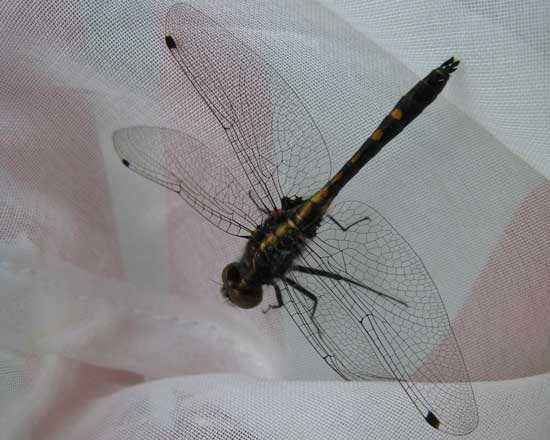
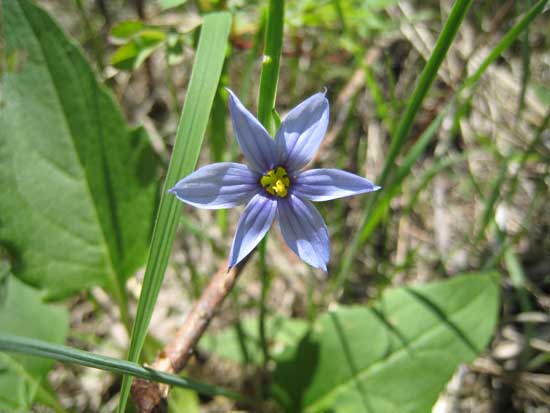
May 31 to June 3: "I searched for bees at three sites in Dakota County this week, but the cloudy weather kept many species grounded. Of course, there were lots of other beautiful invertebrates and flowers that caught my eye!"
 |  |  |  |  |  |
 |
| Janeen Ruby, Plant Ecologist |
 |
May 14-20: MBS worker Janeen Ruby observes spring emerging in a Jackson County wetland.
|
| Crystal Boyd, Entomologist |
 |
May 16: "My first two days of field work with the Minnesota Biological Survey were full of wonderful discoveries. I traveled to Chippewa Prairie Preserve and Lac Qui Parle Wildlife Management Area near Montevideo. I'm surveying native bees this summer, so I wanted to test the collecting protocols. Luckily my pan traps didn't blow away in the 35 mph winds!"
 "This pan trap shows our first bee specimen of the season. We're trapping native bees so MBS can learn more about long-term bee monitoring." |
 "This transect shows bee bowls of different colors stretched out across the prairie." |
 "Prescribed burns clear away duff from the prairie, but this deer shed survived the flames." |
 "Spring came late to Chippewa Prairie this year, so the pasqueflowers are blooming in mid-May." |
 Marsh marigold also known as cowslip, is another flower that signals "Spring is here!" |
 "This seven-spotted ladybug (Coccinella septempunctata) is a cousin of the native nine-spotted ladybug (Coccinella novempunctata). The seven-spotted ladybug was introduced from Europe in 1956, and it started spreading around the time when the nine-spotted ladybug began to decline." |
 |
| Carol Hall, Herpetologist |
 |
May 8-15:Bullsnakes/Gophersnakes (Pituophis catenifer) are associated with sand prairies and sand savannahs. The loss and fragmentation of these unique habitats greatly threatens the future of this species in Minnesota. Local populations require large tracts to feed, lay their eggs, and find suitable overwintering sites. MBS is initiating a monitoring program at selected sites, where snakes are captured, measured, and marked for future identification. A pair of snakes was recently found and processed. In addition, two Bullsnake egg shells were found, remnants from a 2011 or 2012 clutch. Females lay their eggs in the sand where they are incubated by the sun. Slits in the shells mark where the hatchlings emerged. Identifying these sites can be useful in the management of this species, since females may return to the same sites year after year to lay their eggs. Roads located between tracts of sand prairie can be death traps for Bullsnakes."
 |
| Two bullsnakes, a male and female, recently emerged from their winter den sites. |
 A bullsnake nest site within a prairie/sand savannah. The snakes may return to the same location each year to lay their eggs. |
 These shells are the remains of clutches from 2011 or 2012. |
 Roadways between tracts of suitable bullsnake habitat take their toll. |
 |
| Derek Anderson, Plant Ecologist/ Botanist |
 |
May 13: The late arrival of spring also meant a late start to our annual Minnesota dwarf trout lily monitoring (2-3 weeks later than usual!) in southeastern Minnesota. Five volunteers assisted with the work at Nerstrand–Big Woods State Park. The day was also documented by the Rochester Post-Bulletin, highlighting the efforts of a local volunteer, Ron Taallerud.
 |
| The Minnesota dwarf trout lily. Photo by Ron Taallerud |
 Two volunteers help scan and flag individual flowering plants in this colony at Nerstrand–Big Woods State Park. Photo by R. Taallerud. |
 The volunteer crew at Nerstrand–Big Woods State Park pause for a moment to pose for a photo in front of a large group of dwarf trout lilies. Photo by R. Taallerud. |